
Phasing Out Incandescent Lights
Since early 2007 almost all OECD and many non-OECD governments have announced policies aimed at phasing-out incandescent lighting within their jurisdictions. The intention of the regulations
already adopted or under preparation is to encourage the usage of higher efficiency lamps and
most notably compact fluorescent lamps (CFL) in place of standard incandescent lights (GLS) and thereby eliminate a major source of energy waste.
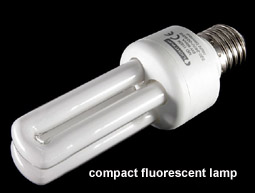 This study considers the implications of these policy developments in terms of demand for regulatory compliant lamps and the capacity and motivation of the lamp industry to produce efficient lighting products in sufficient volume to meet future demand. To assess these issues, it reviews the historic international screw-based lamp market, describes the status of international phase-out policies and presents projections of anticipated market responses to regulatory requirements to determine future demand for CFLs. A specifically adapted version of the global lighting energy simulation model developed for the publication, Light’s Labour’s Lost: Policies for Energy Efficient Lighting, is applied to perform this analysis using up-to-date detailed market data supplied by informed yet diverse sources.
A summary of the main findings is as follows:
- All IEA and EU countries excepting Norway have formally adopted policies to phase-out incandescent lamps. Many non-OECD markets are developing similar requirements or have already started phasing-out GLS lamps. The regulations vary in stringency, scope and schedule but all fall within the period up to 2020.
- New types of higher efficiency lamps have become available, which are broadening the choice of alternatives to incandescent lights.
- The diversity and performance of CFLi continue to improve and its suitability as a broad-basedGLS alternative is less and less in doubt providing efforts are made to maintain the quality of the products available. Even higher-quality versions entered the market at the end of 2008, which amongst other benefits are understood to permit full dimming in all current dimmer circuits.
- An increasing array of solid state lighting products is becoming available but a variety of viability issues still need to be addressed before they can serve as high volume GLS replacement options.
- China dominates the global CFLi industry producing over 80% of global sales. China is also the largest single market for CFLi accounting for 34% of demand by volume, which is just less than the combined OECD demand.
- Global demand for CFLi has risen exponentially over the last decade and continues to rise at a dramatic pace. In 2007, for the first time, CFLi sales exceeded the sum of sales for all incandescent screw-based lamp sales (including GLS and halogen lamps) if viewed from the perspective of the product of lamp sales volumes and socket life expectancy. Sales growth was faster in the OECD than in other regions but grew dramatically everywhere.
- As a consequence the level of increase in demand for CFLi in direct response to the various international phase-out regulations will not be as great as once anticipated because demand has already risen and the replacement volume of future incandescent lamps replacement sales will be proportionately reduced.
- Nonetheless international demand for CFLi will be greatly increased, as to a lesser extent will demand for advanced halogen lamps, in response to the regulations.
Various demand profiles have been examined, which show that pending regulatory decisions in the EU and potentially China could have a large impact on the final magnitude and profile of demand. However, the risk of inducing shortages in lamp supply appears to be relatively modest as combined international demand profiles are only slightly peaked while the rate of the total growth in demand is most likely manageable by the international lamp industry if past precedent is a reliable basis for estimating the ability to add new production capacity. The risk is slightly enhanced if both the EU and China decide to opt for accelerated phase-out strategies but may be manageable nonetheless.
Source: IEA, Phase out of incandescent lamps: Implications for international supply and demand for regulatory compliant lamps, http://www.iea.org/papers/2010/phase_out.pdf